
AI is a net job creator, not a job killer!
I just published a research article on the impact of artificial intelligence on work. "Artificial Intelligence and Work – The Impact on Jobs, Skills, and Careers"
Punch line
„AI is a net job creator, not a job killer!“ “
A significant replacement of human labor by AI is not expected until 2030. However, AI skills become important and job-relevant during this period.
But read on, here is a synopsis of my research.
The research investigates the impact of artificial intelligence (AI) on jobs, skills, and careers. Desktop research uses the most recent data, primarily published over the last three years, focusing on the current global situation leading up to 2030. The careers section covers the period up to 2060.
The text examines the impact of geoeconomic fragmentation, technological changes, demographic shifts, and AI on the future of work. It explores the challenges facing key industries, such as the European automotive sector, as well as the growing demand for AI-related skills.
Discover why adaptability, continuous learning, and upskilling are crucial for maintaining employability.
The main findings indicate that AI is a job creator, not a job killer. A significant replacement of human labor by AI is not anticipated until 2030. However, AI skills are becoming increasingly essential and job-relevant during this period. A person lacking adequate AI skills may lose their job to someone who possesses them.
Significant effects of automation are expected from 2030 onwards. Given the current demographic situation, it is unlikely to pose significant issues for learning-oriented employees. Automation is anticipated to help alleviate the labor shortage caused by demographic changes.
Substantial investments must be made in workforce qualification to ensure workforce members remain employable. Certificate courses, such as those provided by online learning platforms like Coursera and edX, are essential for upskilling the workforce.
Individuals should explore specific career strategies, consider AI's medium- to long-term impact, and acknowledge the transformational shifts occurring. It is expected that a person entering the workforce at around 20 to 25 today will need to recareer, on average, every seven years.
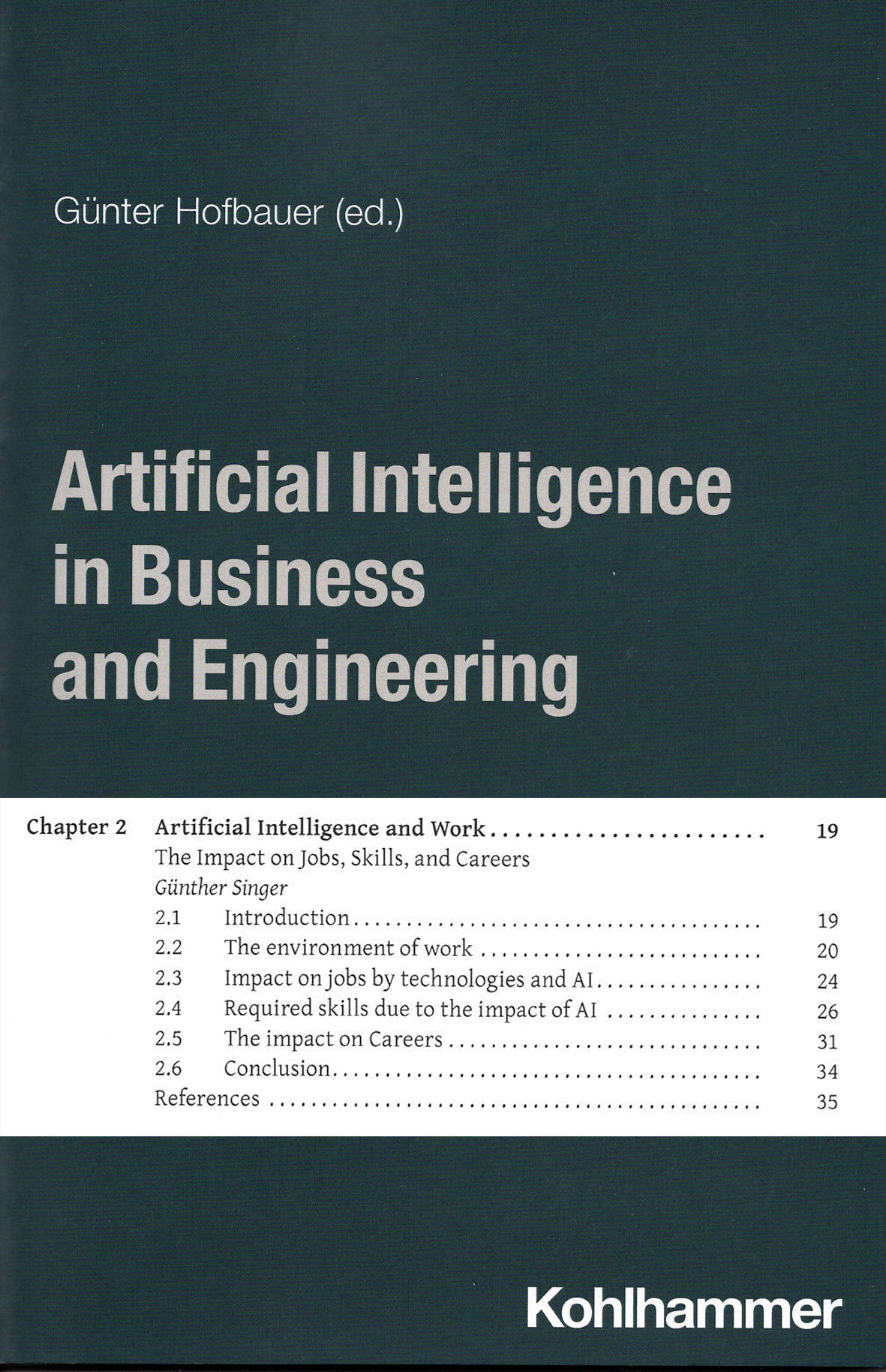
You can find the full text in this publication.
Source
Singer, G. (2025). Artificial Intelligence and Work - The Impact on Jobs, Skills, and Careers. In G. Hofbauer (Ed.), Artificial Intelligence in Business and Engineering. Kohlhammer Verlag.
