
Work will be optional! Really? Elon Musk and Jensen Huang
Welcome to this blog, which includes a polar discussion between Elon Musk and Jensen Huang that took place at the U.S.-Saudi Arabia investment forum in Washington in November 2025.
You can find the link to my vlog on YouTube, which includes the debate between Elon Musk and Jensen Huang on the topic, at the end of this article.
The impact of technology on jobs and careers has been a research topic of mine for over 10 years.

Impact of technology on jobs and careers
My interest was sparked by the research report "The Future of Employment," by Frey and Osborne, two researchers from the University of Oxford, published in 2013. The researchers analyzed over 700 different jobs in the categories of "Social Intelligence", "Creativity", and "Perception and Manipulation". The intent was to assess the likelihood that these jobs would be replaced by technology over the next 10 to 15 years, from 2025 to 2030. The main finding was that about 45 percent of these jobs could be replaced or automated in the United States during this period, and 35% in the United Kingdom. The discussion was not yet about artificial intelligence, but about automation in general.
This report sparked a lot of discussion in academic and business communities, as well as in politics more broadly. There were conferences where the CEO of Siemens, the representative of the Holy See, and the President of the World Federation of Trade Unions sat on a panel to discuss the potential impact. A lot of shared concern, but unfortunately, no plausible strategies to address the challenges.
If automation of 45% of jobs had come to pass, the effects would have been disastrous for the job market, people's well-being, and political systems by now. Although everyone knew that automation would have an impact, it was hoped that the transformation would proceed more slowly, so people and systems could adapt to the challenges.

If 45% of jobs were lost in 10 years.
In the meantime, many unexpected things happened, including a Global Health crisis, but the predicted job losses didn't materialize. On the one hand, the efficiencies promised by technology are difficult to realize, and on the other hand, demographic changes in many countries reduce the potential labor pool.
But now - déjà vu! A new genie that will kill jobs, sorry, provide miraculous productivity gains, is out of the box. AI, as a new potential job killer, has appeared.
Artificial intelligence made an impressive entrance on the world stage over the last three years. Complex, very useful, and it is a game-changer. And as it works with other transformative technologies in the past, it raises expectations and fears. Many people who know better instrumentalize the situation to cash in on attention irresponsibly. I could give you a long list of these in the business, political, and academic worlds now. But they don't want to provide them with an additional stage for their ill-conceived predictions.
I want to share a discussion between Elon Musk and Jensen Huang that took place at the U.S.-Saudi Arabia investment forum in Washington in November 2025. They had very polar opinions on the impact of AI on jobs.
They discussed AI and the Future of Technology. This included the impact of AI on jobs. They had very polar opinions. Elon Musk offered a long-term prediction that work will become optional (perhaps in 10 to 20 years), similar to playing a video game or growing vegetables in a backyard as a hobby.
Jensen Huang countered with a near-term perspective, suggesting that while everyone's jobs will change and people will be more productive, they will likely be busier. This increased productivity frees up time to pursue the numerous ideas and backlog items that people or companies have.
You can find the video of my vlog on YouTube, which includes the debate between Elon Musk and Jensen Huang, at the end of this article.
To add to the debate myself.
I just published research on the impact of artificial intelligence on the labor market. Yes, some jobs have been lost to AI, but currently, AI is a net job creator, not a job killer!
„AI is a net job creator, not a job killer!“
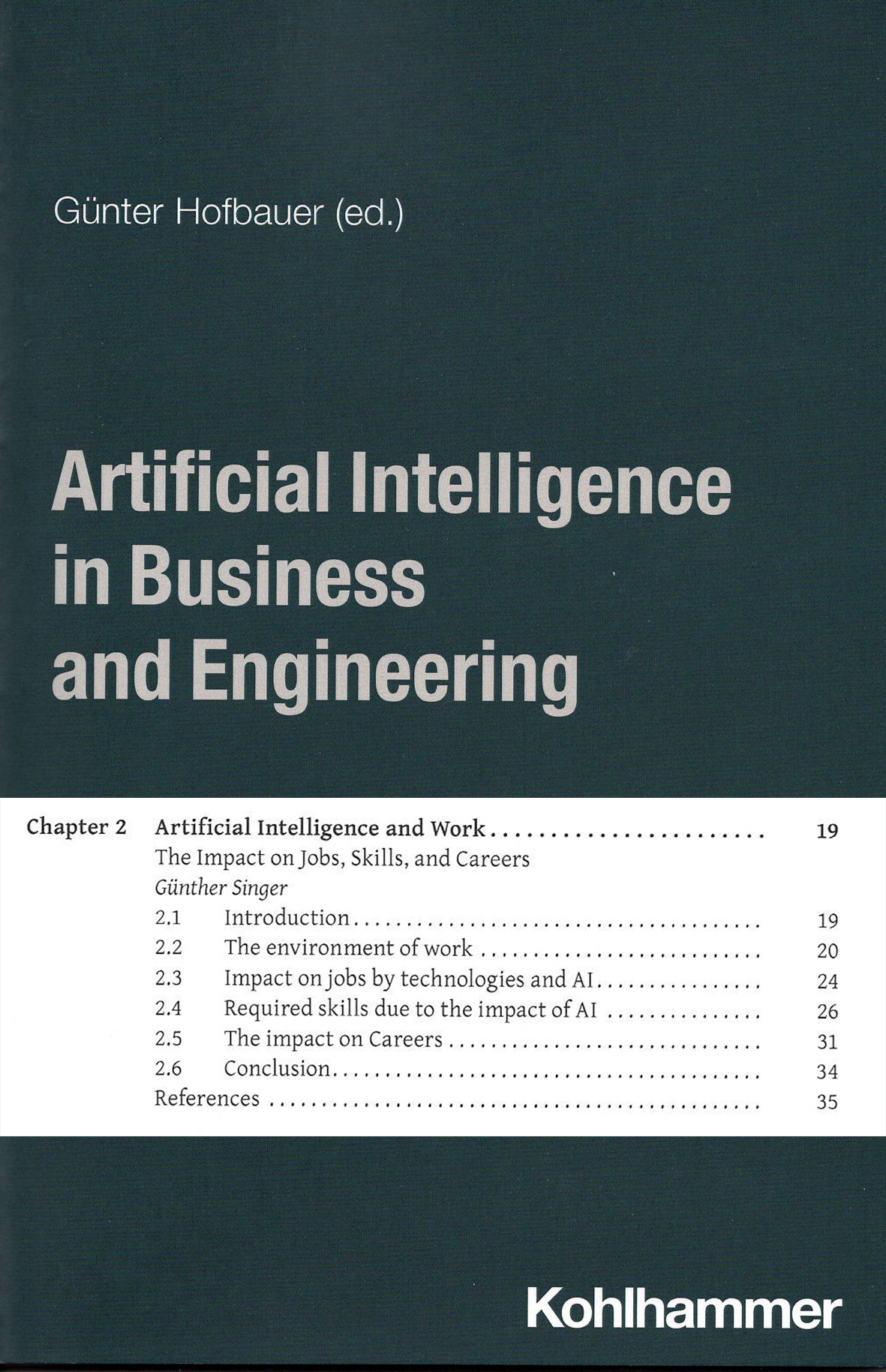
Artificial Intelligence and work - The Impact on Jobs, Skills and Careers
Many investments are being made to build infrastructure, train people, and numerous companies are dedicating significant time and effort to find productive ways to use the new technology. The results of my research might become the topic of a future video.
In the meantime, keep your cool and keep learning.
CREDITS
Adobe Stock, artlist.io, CNBC-TV18, Gemini 3 - Nano Banana Pro, Kohlhammer Verlag, wabisabi-photography.art
